















































The Top Sites to Buy and Sell Rust Skins
Looking for the safest sites to buy and sell Rust skins for real money? We compare the top Rust markets in 2025.
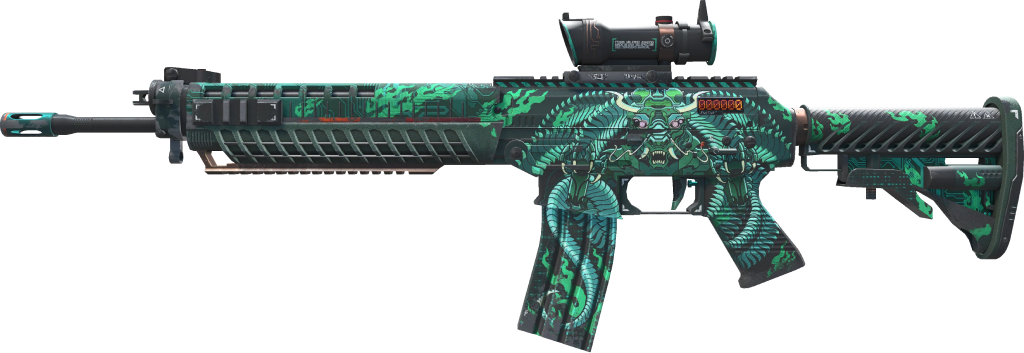
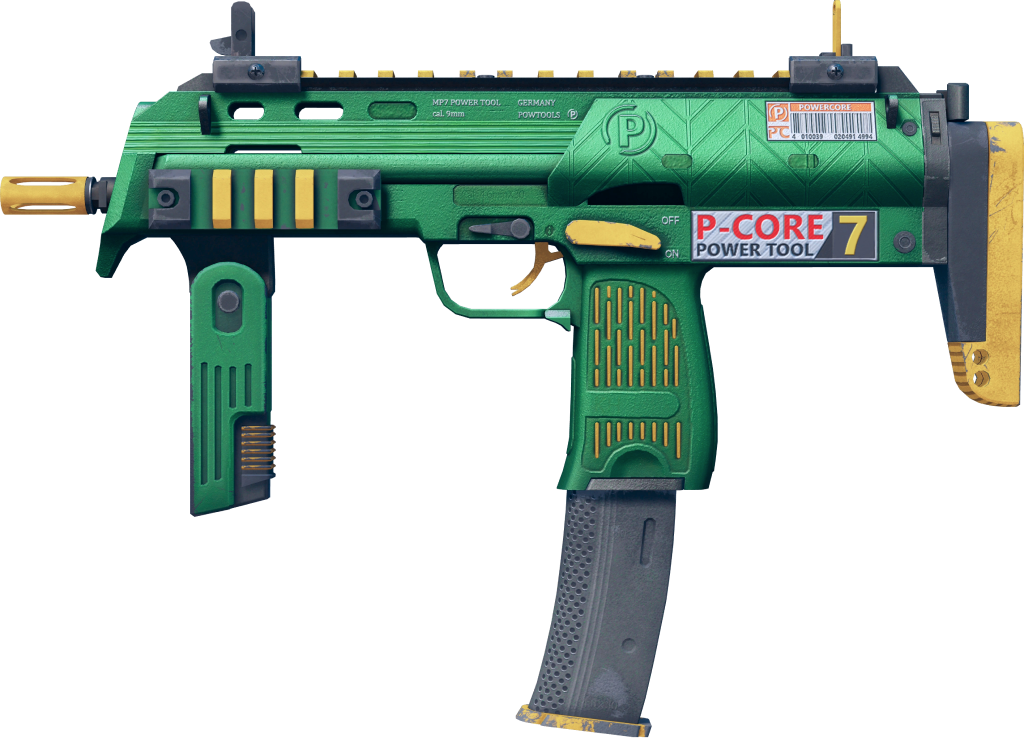
Second only to that of Counter-Strike, Rust has one of the most active skin economies in gaming. From clothing and weapons to tools and furniture, practically every item in the Rust game can be customized with unique designs created by other players or Facepunch devs themselves. These cosmetics not only change the appearance of your gear but also hold real-world value, with some rare Rust skins selling for hundreds or even thousands of dollars. Players who want to buy Rust skins at the lowest prices or sell Rust skins instantly for real money usually look beyond the Steam market. That’s where third-party Rust marketplaces come in.
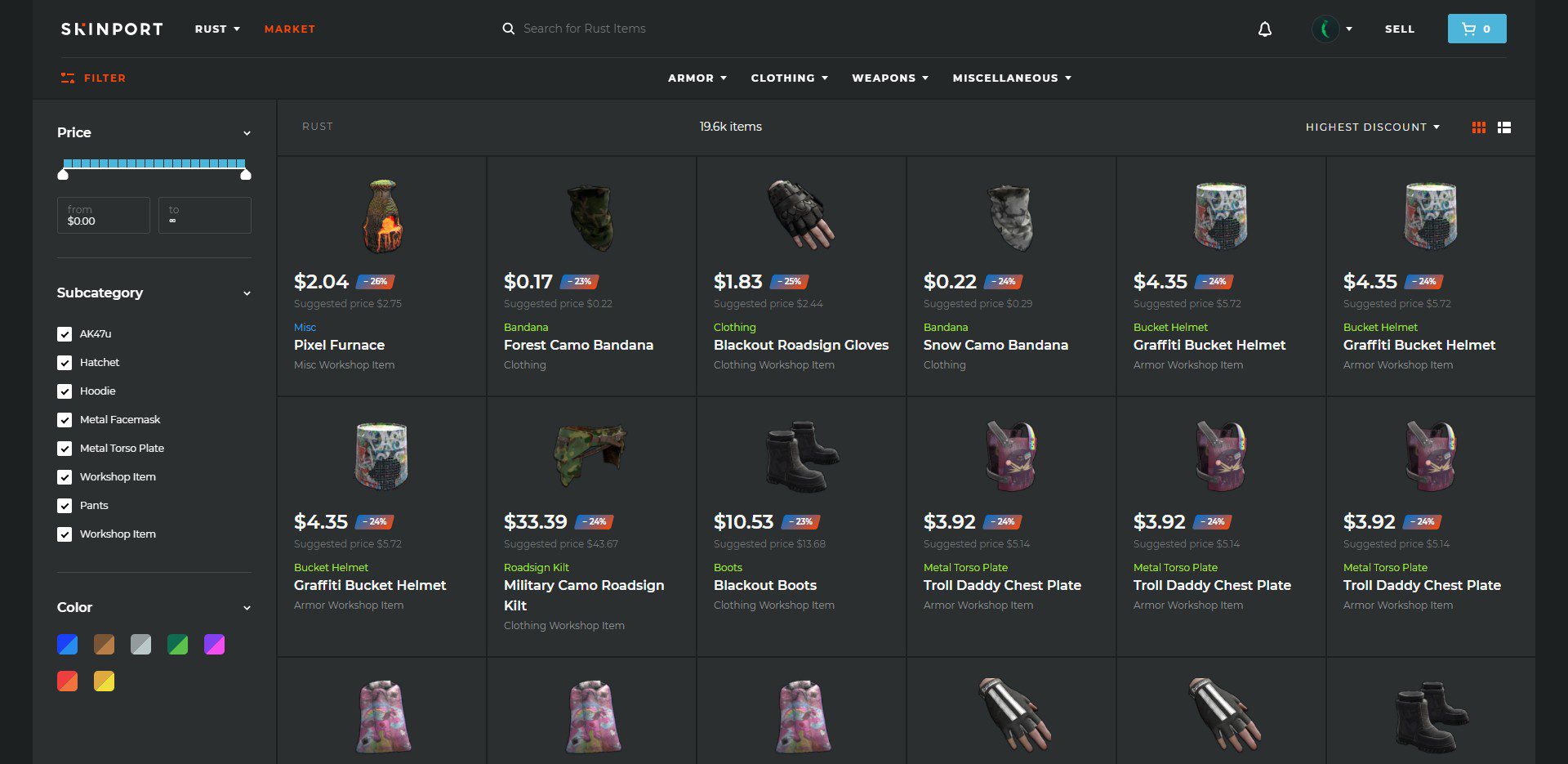
In this guide, we’ll cover the best Rust skin markets in 2025, explain how these platforms work, and discuss the most important factors when considering which Rust skin marketplace to buy and sell Rust skins for real money. Whether you’re looking for the cheapest way to buy Rust skins or a secure way to cash out your inventory, this walkthrough will give you everything you need.
Why Use a Rust Marketplace Instead of the Steam Community Market?
The Steam Community Market is technically the only official, Steam-sanctioned way to sell Rust items, but it comes with two major limitations: a 15% sales fee and the fact that the proceeds of your sales remain locked in your Steam account. If you sell Rust skins on Steam, you can only use the money for games or in-game items; you can’t withdraw real cash. For players who want to cash out their inventories and earn money instantly, this is a huge dealbreaker.
Third-party Rust skin marketplaces solve this problem. These platforms let you buy skins with a much wider variety of payment methods, including credit and debit cards, crypto, PayPal, bank transfer, and more. More importantly, they allow you to sell Rust skins for real money and withdraw directly to your preferred payment method.
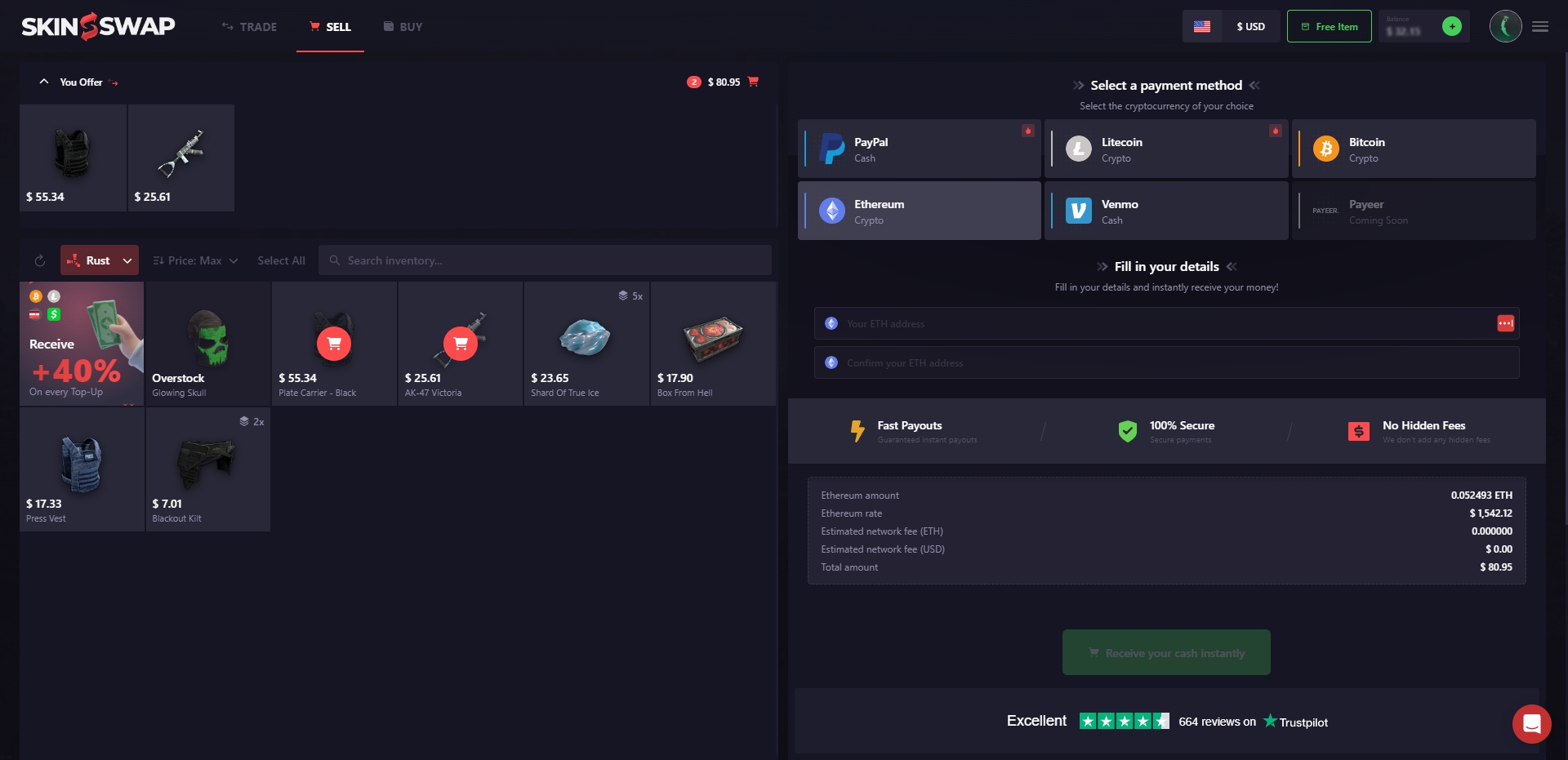
Another reason players use external sites is price. Because third-party markets don’t have fees as high as Steam’s and funds can be withdrawn for real money, skins are often listed at a lower price. A rare weapon skin that might sell for $100 on Steam could be found for $80–85 on a Rust marketplace. Over time, those savings add up.
How Rust Skin Markets Work
At the core of most Rust skin marketplaces are automated trading bots. Rust marketplaces owns hundreds of these bots, which act as intermediaries between players. When you buy or sell an item, you’re not directly trading with another user in real time; instead, you interact with one of the marketplace’s bots, which holds the skin until the seller gets their money, then releases it to the buyer.
When a seller lists a Rust skin, they first send it to a marketplace bot. The bot stores the item in its Steam inventory until a buyer comes along. Once the purchase is confirmed, the bot instantly sends a Steam trade offer to the buyer’s account, eliminating delays.
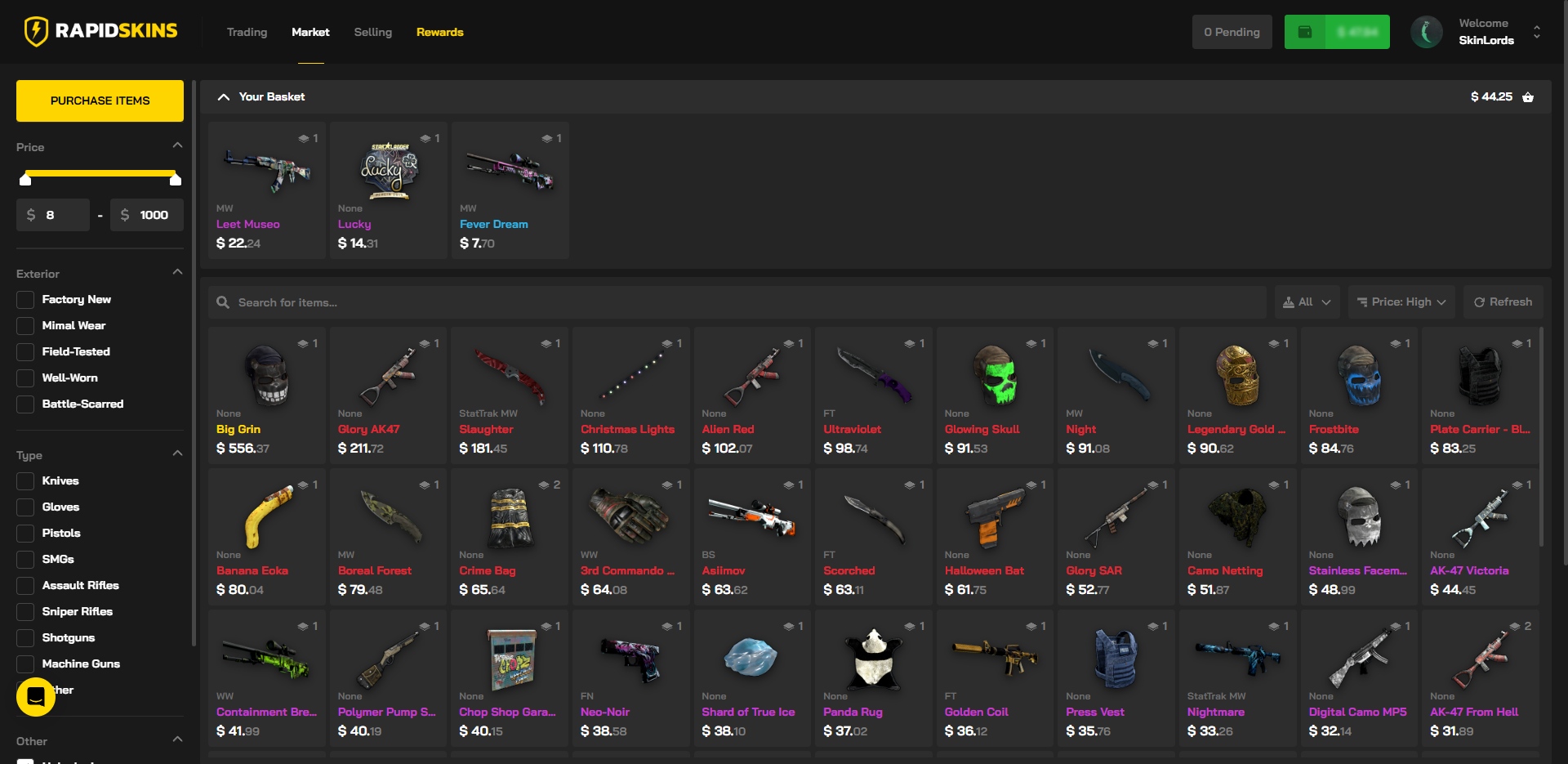
When you want to sell Rust skins instantly, you send them directly to the marketplace’s bot. The bot confirms the item and lists your skin for sale in its public catalog.
This system is what makes bot-based Rust markets different from P2P marketplaces. With bots, everything is automated, fast, and reliable; you dont have to wait for another player to be online or risk backing out of a trade. The tradeoff is that bots often set stricter margins, so you might pay a little more when buying or receive slightly less when selling.
Types of Rust Marketplaces
Not all Rust skin sites work the same way. There are three main types of platforms players use in 2025:
-
 Bot Trading Markets – These use automated bots that hold inventories. You buy or sell instantly, with no need to wait for another player. While convenient, prices can sometimes be higher due to higher fees.
 - Peer-to-Peer (P2P) Marketplaces – Buyers and sellers connect directly, with the site acting as a middleman for security. P2P sites often have the lowest fees and the largest selection of Rust skins for the lowest prices.
- Instant Cashout Sites – Perfect for players who want to sell Rust skins instantly and withdraw real money. These sites typically pay less than full market value but offer speed and convenience.
Choosing the right option depends on whether your priority is cheap skins, instant sales, or trading security.
Buying Rust Skins in 2025
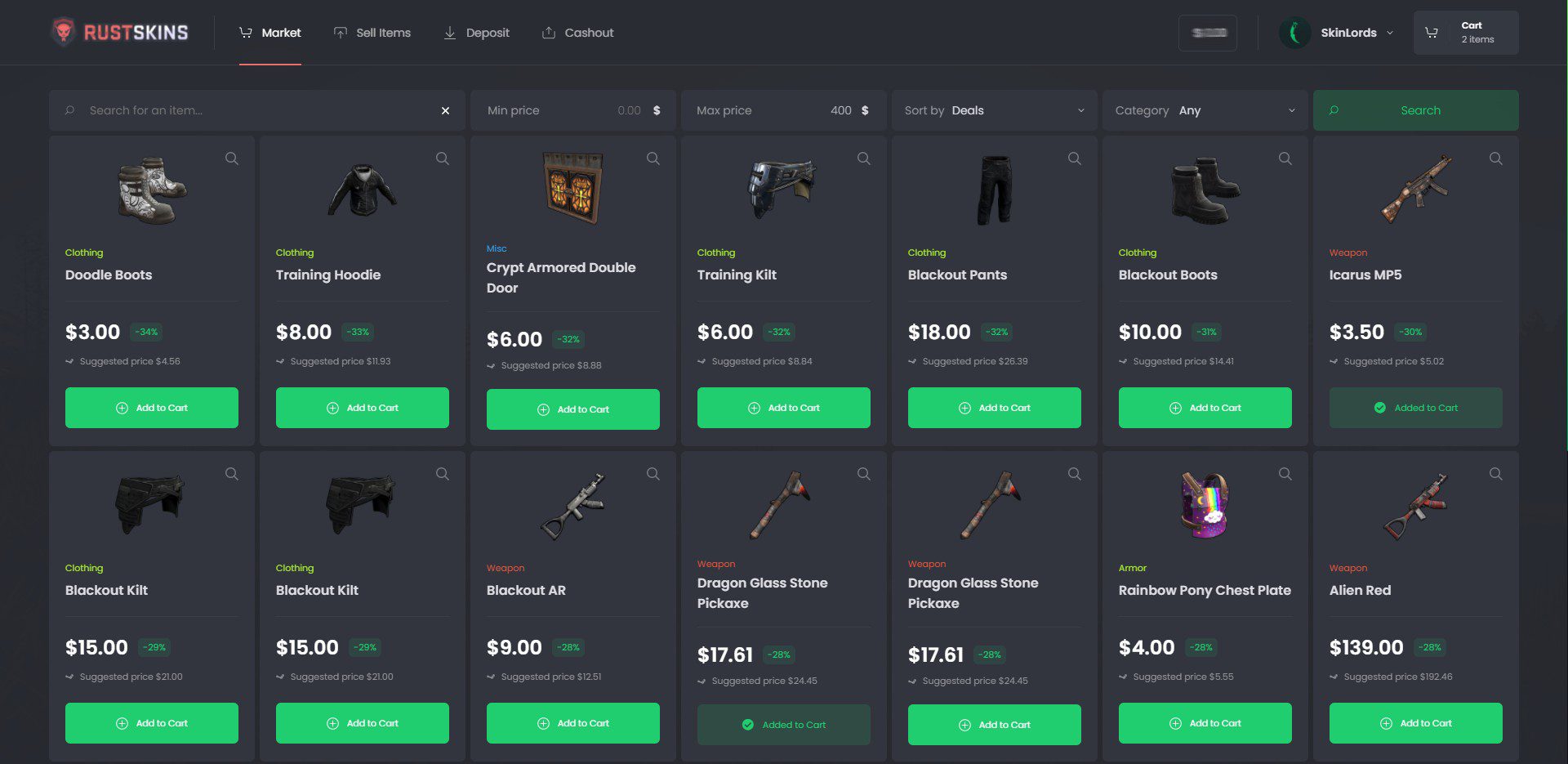
Purchasing Rust skins is a simple process. After using your Steam account to log in, you can browse thousands of items by type, rarity, and price. Many players focus on weapon skins, since they see the most use in-game, but clothing, tools, and even furniture items are also popular. Some marketplaces even highlight expensive skins that are in high demand, like rare weapon designs or limited-edition clothing.
Transparency is a big benefit of Rust skin markets. They often tell you exactly how good of a deal you are getting in comparison with Steam prices or original Rust item store prices.
Payment flexibility is another benefit. While Steam only accepts wallet funds, Rust marketplaces usually support PayPal, bank accounts, debit cards, crypto, and regional payment options. Players can pick whichever is most convenient, making it much easier to buy Rust skins instantly.
Selling Rust Skins for Real Money
For many players, the main reason to use Rust marketplaces is to turn in-game items into cash. Selling Rust skins is straightforward: list your items, wait for a buyer, and then withdraw your money once the sale is complete.
Most sites offer multiple withdrawal methods, including PayPal, bank transfers, or cryptocurrency. Some also support prepaid cards or region-specific options, which makes them accessible to players around the world.
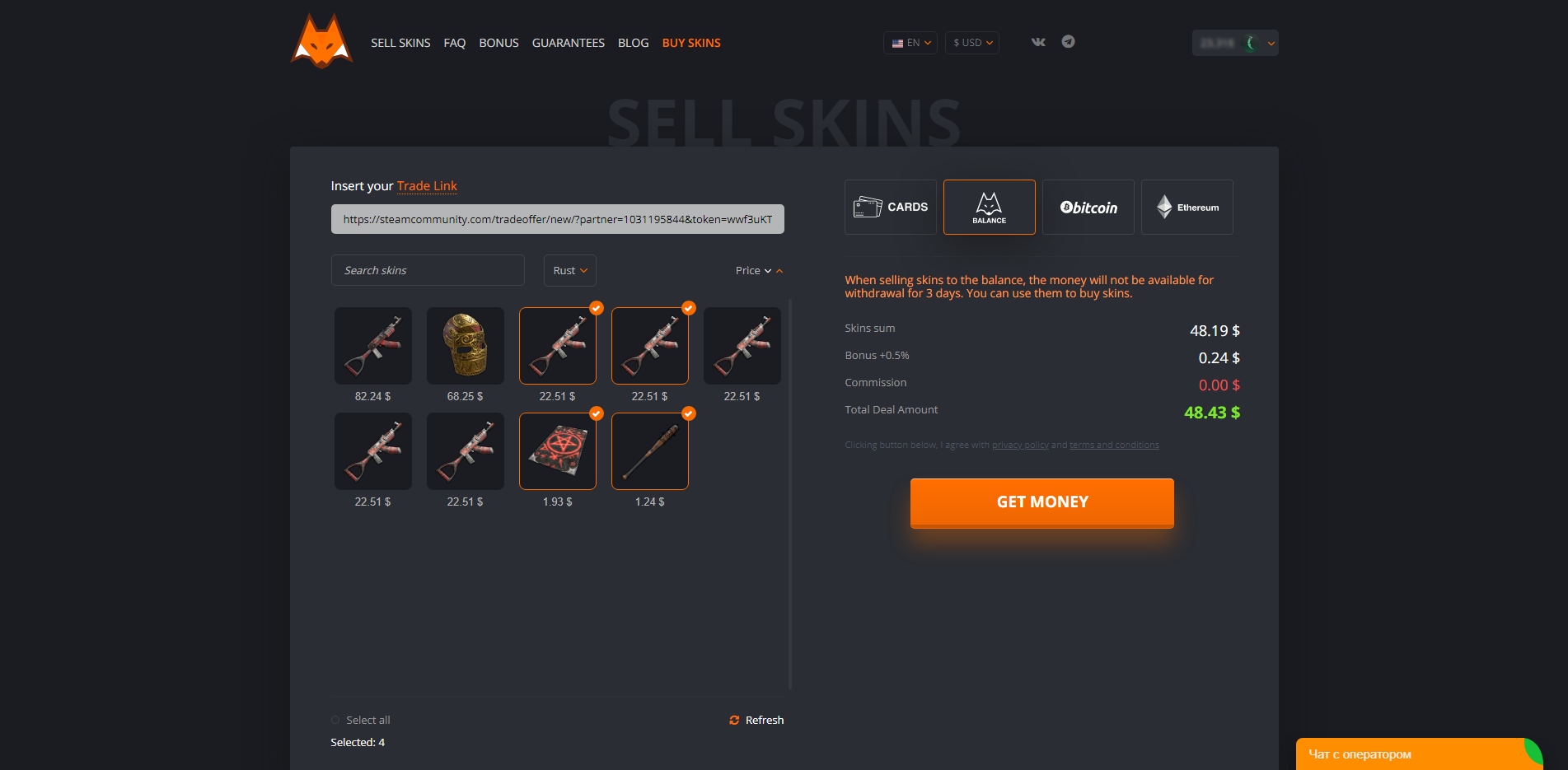
The big decision sellers face is whether to use P2P selling or an instant sale option. With P2P, you set your own price and may earn more, but you’ll need to wait until a buyer accepts. With instant sales, you can sell Rust skins instantly, but usually for 10–20% less than market value. It comes down to whether you prefer maximum profit or instant payment.
How we Rate Rust Skin Marketplaces
Not all Rust markets are equal. Some websites offer great deals, while others come with hidden sales fees, poor support, or even questionable security. When determining the best Rust marketplace sites, we take a variety of factors into account.
Reputation and Trust
The first factor we consider in ranking Rust marketplaces is reputation and trust. We examine user reviews, community forums, and each platform’s trading history. A Rust skin marketplace that has operated safely for years and consistently receives positive feedback from thousands of players naturally earns a higher rating than newer, unproven, or less transparent platforms.
Security
Security is non-negotiable when dealing with Rust items. The best marketplaces protect both Steam accounts and financial details with two-factor authentication, account verification, encryption, and transparent trade policies. Without these protections, users risk losing their Rust skins, Steam accounts, or even their money. Strong security is a baseline requirement for any marketplace to get a high rating.
Pricing and Fees
We also carefully evaluate pricing and sales fees. Some marketplaces claim to offer the best prices but add hidden fees for sellers or buyers during checkout. By contrast, the best Rust skin markets are fully transparent about their fee structure and regularly provide better deals than the Steam Community Market. A low sales fee makes a significant difference: anything under 5% is competitive, with some platforms offering as low as 1.5%, while others can reach as high as 12%.
Inventory Availability
A strong Rust skin market must also have a large and varied inventory. The best platforms stock millions of Rust items, ranging from budget-friendly weapons and clothing to rare collectibles. A wide inventory ensures that buyers and sellers can always find the exact Rust skins they’re looking for at a fair price.
Payment Options
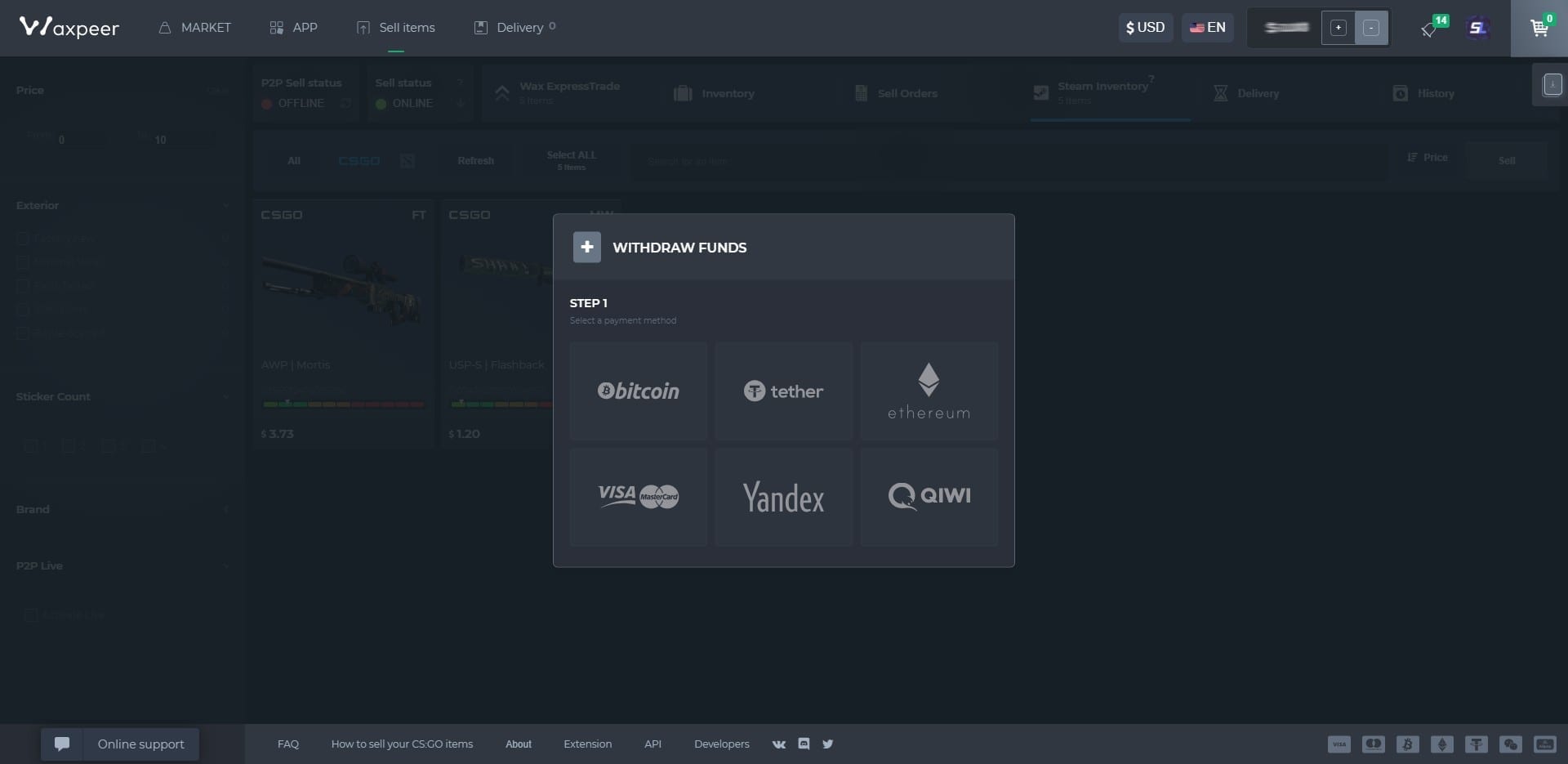
Payment flexibility is another key consideration. Leading Rust marketplaces support a variety of payment options, including PayPal, debit/credit cards, cryptocurrency, and direct bank transfers. This allows both global buyers and sellers to conveniently move money in and out of the marketplace, without being locked into a single payment method.
Customer Support
No matter how good a site is, issues will inevitably arise, making responsive customer support essential. The best Rust markets offer 24/7 live chat services, with replies arriving within minutes rather than hours or days. This ensures that issues such as delayed trades, payment errors, or bot failures are resolved promptly.
Ease of Use
Finally, ease of use plays a big role in user experience. In-game cosmetic trading can be complicated and confusing to new users, so a clean interface, advanced filters, and smooth transactions make trading much more efficient. Platforms that streamline every step of the process stand out above the rest.
Rust Skin Market FAQ
Rust skin markets are third-party websites where players can buy and sell Rust skins for real money. Unlike the Steam Community Market, these sites allow withdrawals, meaning you can cash out your profits or deposit funds directly to purchase new skins.
The safety of a Rust skin market depends on its security features and reputation. Trusted platforms use encryption, two-factor authentication, and verified bots to process trades. Always check reviews and avoid using unverified sites, as scams are common in the trading scene.
The Steam Community Market takes a 15% fee and doesn’t allow real-money withdrawals. This means once you sell a Rust skin on Steam, your balance is locked on Steam. Third-party Rust marketplaces usually offer lower fees and give you the option to cash out to your bank, cards, crypto, or other payment methods.
Most Rust markets use automated trade bots. When you buy a skin, you pay through the website, and the bot instantly sends you a Steam trade offer. When you sell, you deposit your skin to the bot, list it for sale, and once purchased, you receive real money to your balance or chosen payment method.
Rust skin markets with bots handle trades automatically, ensuring instant delivery. Peer-to-peer (P2P) platforms connect buyers and sellers directly, which can result in better prices but often slower and riskier transactions since you rely on another player to complete the trade.
Fees vary depending on the site. Some take as little as 1.5% from sellers, while others charge over 10%. Buyers may also face payment processing fees. Always check the marketplace’s fee structure before trading.
Yes. That’s one of the main benefits of using third-party Rust markets. Many support withdrawals via PayPal, cryptocurrency, bank transfers, and cards, depending on the platform.
Most major Rust skin markets now support cryptocurrencies, making it easier for global users to buy and sell Rust skins without relying on traditional banking.
Always stick to established marketplaces with a proven track record, secure payment options, and verified bots. Avoid dealing with random traders on Discord or through direct Steam messages, as those are standard scam methods.
 Stake
Stake