

















































What is GamingDragons.com?
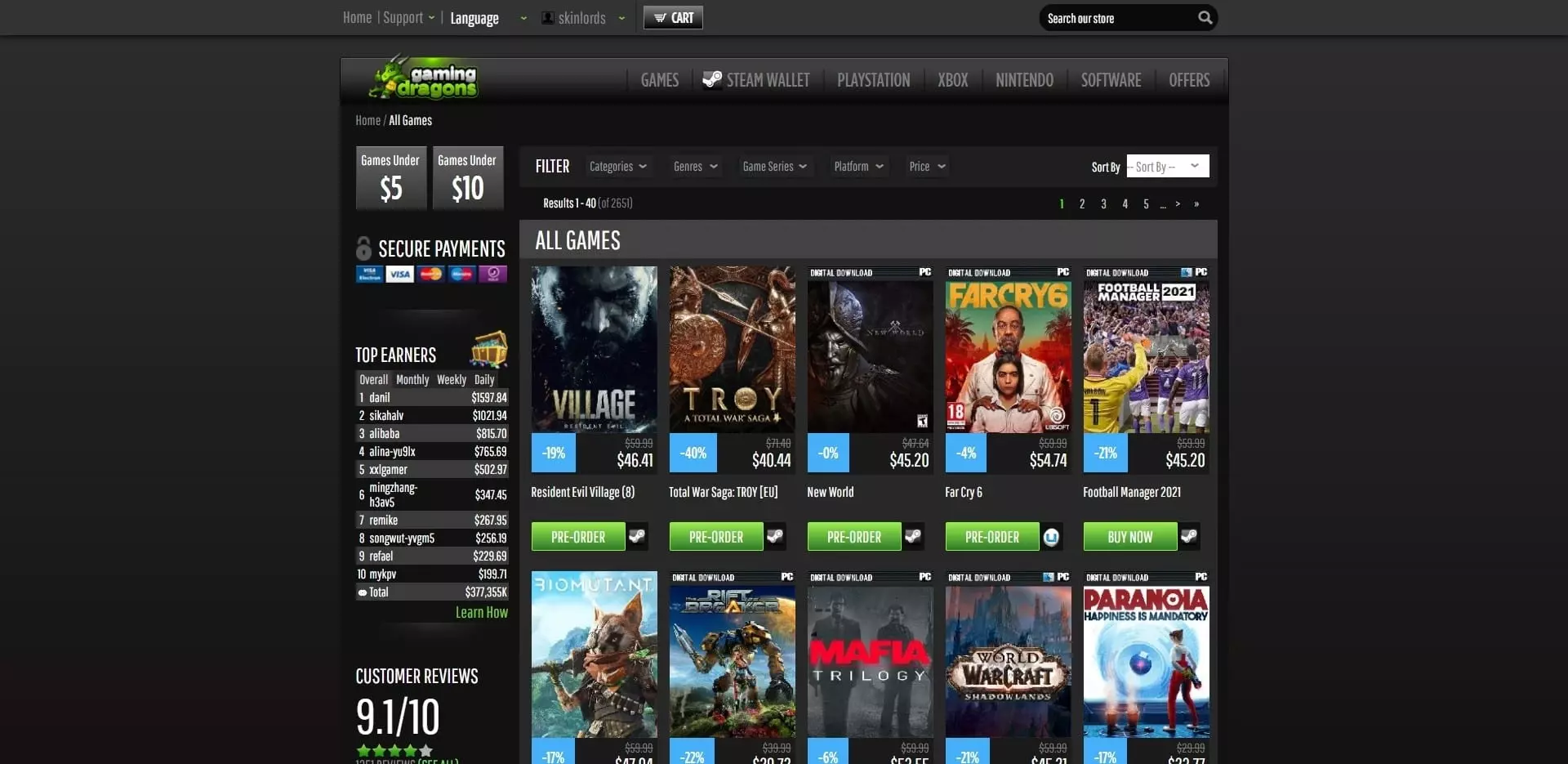
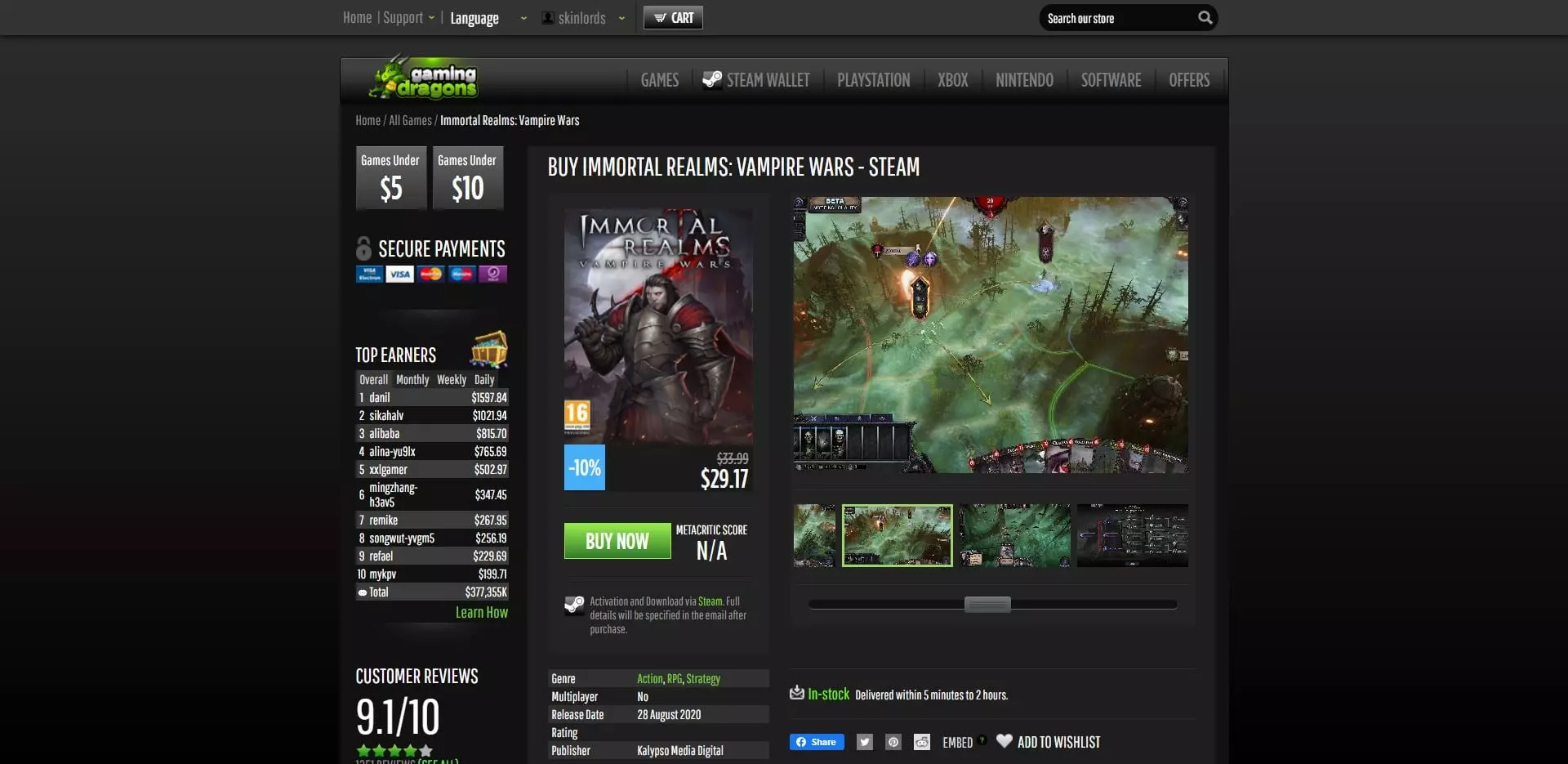
GamingDragons.com is a small, but extremely long-lived online marketplace for buying digital game keys, software keys, in-game currencies, subscriptions, Steam keys, and much more, all at discounted rates. Gaming Dragons, formerly UltimatumGameKeys, launched in 2011 and has provided products to hundreds of thousands of customers since.
Gaming Dragons, as an online marketplace, prides itself on its great deals and claims to offer these deals because of how they source their keys. By purchasing keys in bulk from various licensed sources and not having to pay shipping fees due to being an online platform, they can sell keys instantly and at lower prices than other sites.

What Offers and Promotions Does Gaming Dragons Offer?
Gaming Dragons hosts a gem-based reward system, where certain actions can earn users a unique currency that can then be spent to receive bonuses. Gems can be earned by purchasing digital download games and posting reviews for those games, as well as by referring friends. Gems can be used to achieve cheaper prices on products or even to fully pay for your next purchase.
What are GamingDragons.com’s Payment Methods?
Gaming Dragons’ selection of payment methods is fairly limited, offering only FIAT payments via card or through third-party services hosted on the site, including PayPal, Skrill, Neteller, and PaySafeCard. Users can also withdraw gems they have earned through Gaming Dragons’ rewards system via PayPal or MoneyBookers, assuming they have over $50 worth. Gaming Dragons does not support any cryptocurrencies or Steam items. For the complete list of payment methods supported by GamingDragons.com, check out the “Payments” tab, located in the menu at the top of this page.
Who Owns Gaming Dragons & What Are Their Policies?
Who Owns GamingDragons.com?
Gaming Dragons is operated by U.G.K. GAMES LTD under corporate number 515220267, and with its registered office at 30 Shoham St., Kfar Yona, 4030000, Israel.
Does GamingDragons.com Require KYC?
Gaming Dragons does not require buyers to complete Know Your Customer (KYC) verification, but users must send identifying information, such as a photo ID, to customer support to prove that they are legitimate customers after making their first purchase.
 Stake
Stake