










































CS2 Hitboxes Explained
In highly competitive online games such as Counter-Strike 2, precision is paramount. Every shot you take can determine the outcome of a round and, by extension, the entire match. Sometimes, however, when you feel like that AWP shot clearly hit the enemy player, did it really? In this article, we’ll break down CS2 hitboxes, the damage multipliers of different hitboxes, and some common hitbox myths.
Contents
-
 What are CS2 Hitboxes?
 -
Hitbox Damage Multipliers
-
Debunking Common Hitbox Myths

Find more informational CS2 guides on our blog!
What are Hitboxes in CS2?
Hitboxes are used in many other games besides the Counter-Strike series, and they’re essentially invisible geometric shapes attached to character models. These are how games detect whether bullets or projectiles hit enemy players. As we’ll go into later, hitboxes in CS2 are broken down into multiple regions of player models, assigning different amounts of damage (damage multipliers) to enemy players. However, confusion might arise from the geometric shapes due to bullets hitting the player models’ hats or backpacks, which may not constitute hitting the hitbox. For this reason, understanding hitboxes in CS2 holds great importance.
Anatomy of CS2’s Player Models
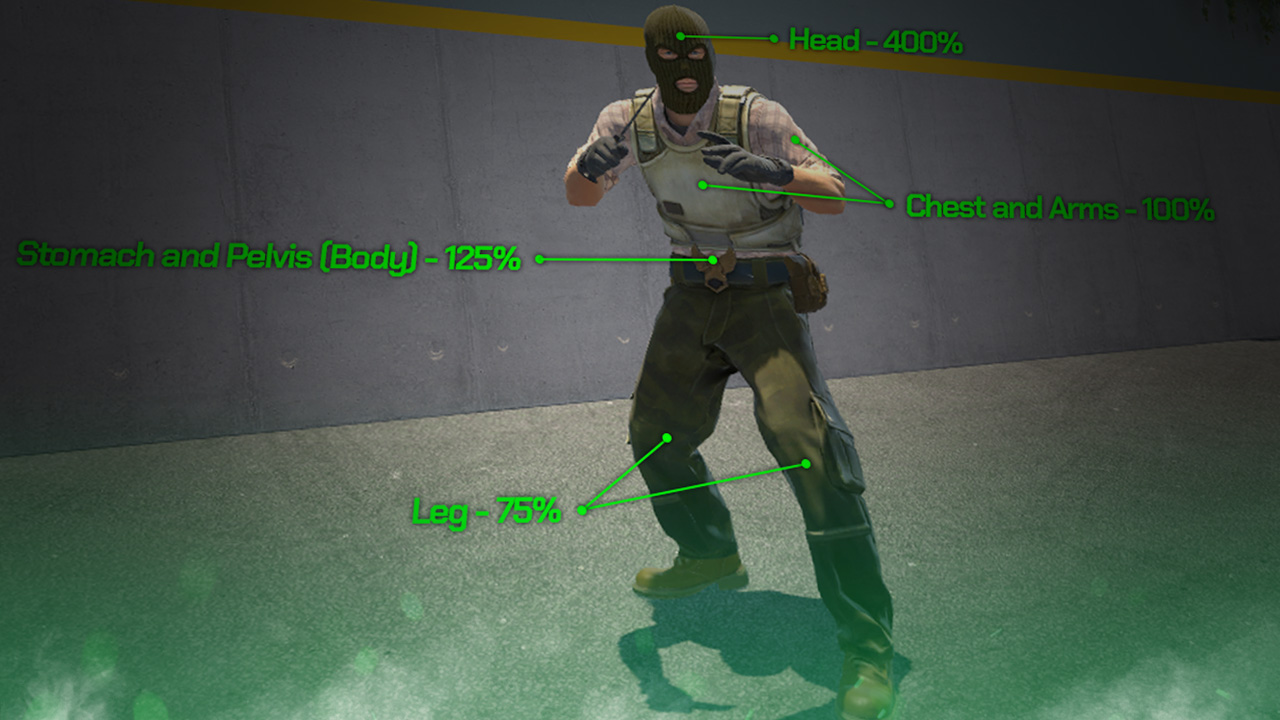
Hitboxes in CS2 are broken down into four different areas: the head, the arms and chest, the stomach and pelvis, and the legs. Some have noticed that CS2’s hitboxes are currently imperfect, where the hitboxes do not line up clearly with the displayed character models. For instance, when players aim at the neck, CS2 may count that towards a headshot. We’ll review some common misconceptions and problems with CS2 hitboxes later in the article.
CS2 Hitbox Damage Multipliers
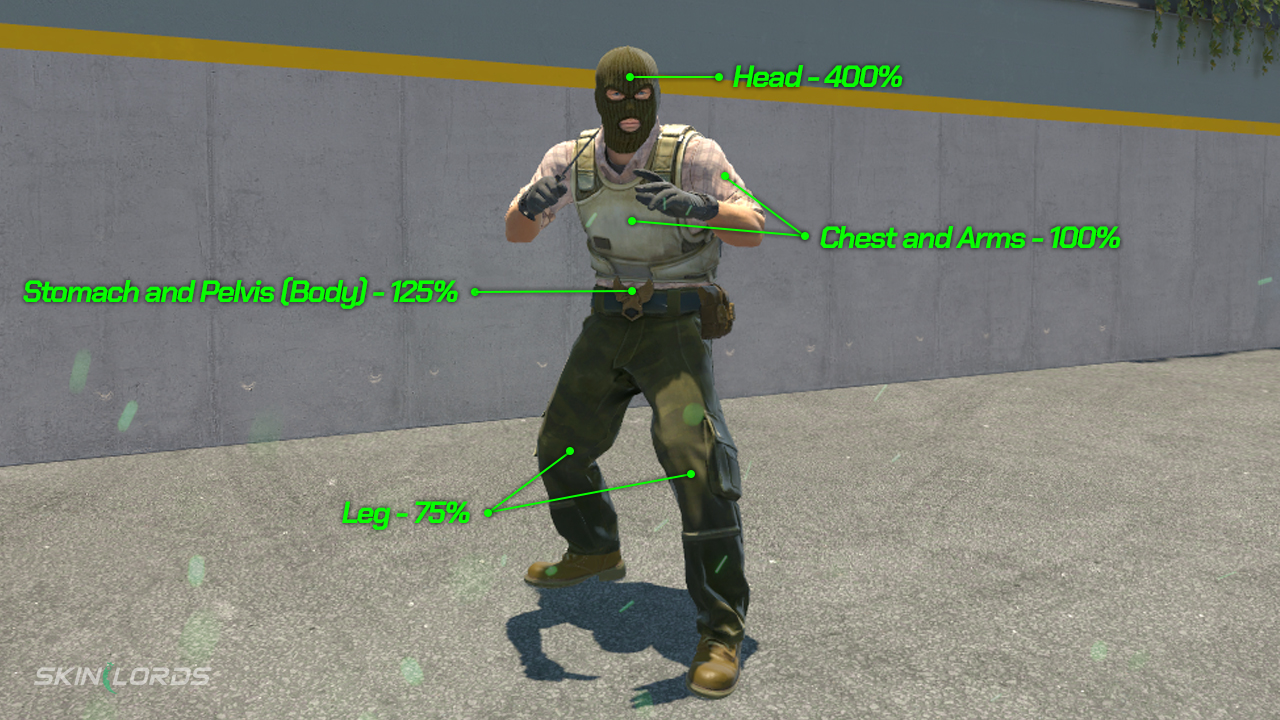
Now, let’s break down how much damage hitting each target will do.
- Head – 400%
- Chest and Arms – 100%
- Stomach and Pelvis (Body) – 125%
- Leg – 75%
Buying Kevlar will protect your chest, arms, stomach, and pelvis (basically the whole body), while buying a helmet also extends that protection to the player’s head. From these damage multipliers, you should aim to hit players in the head for the most damage, then the stomach/pelvis, then the chest/arms, and finally, the legs. For example, if a weapon normally does 100 damage (not counting damage dropoff), hitting a player in the head will instead of 400 damage. Hitting them in the leg, meanwhile, will do just 75 damage.
Common CS2 Hitbox Myths
Technical skill is the most critical aspect of competitive gaming, but sometimes it might feel like you got CS2’d (getting screwed by the game). There are many different myths surrounding hitboxes that feel like they break the spirit of these competitive games, but are they really true?
- Hitboxes are different between agents – Not true! All hitboxes are standardized across all player models or agent skins to keep the game’s competitive integrity. For example, agent Ava’s hitbox is the same as any other CS2 hitbox, including the default skins.
- Shooting between the legs register – Another prevalent myth about CS2 hitboxes is that shooting between the legs will register as a hit…not true! Bullets must intersect with an actual model hitbox for it to count.
- Hitboxes lag behind agents – When hitboxes are not adequately aligned with character models, it can easily cause frustrating moments where it feels like your shot should have hit, but the game mistakes it for a miss. Though relatively uncommon, it can happen for many reasons, including when you have high ping or packet loss. To learn more about monitoring your internet connection, check out our guide, “Net Graph and Telemetry in CS2 – How to Monitor FPS and Server Connection.” CS2’s subtick system also minimizes discrepancies between the server and client, which you can also read more about in our guide, “CS2 “Sub-Tick System” – How Does it Actually Work?”
Problems with CS2’s Hitbox
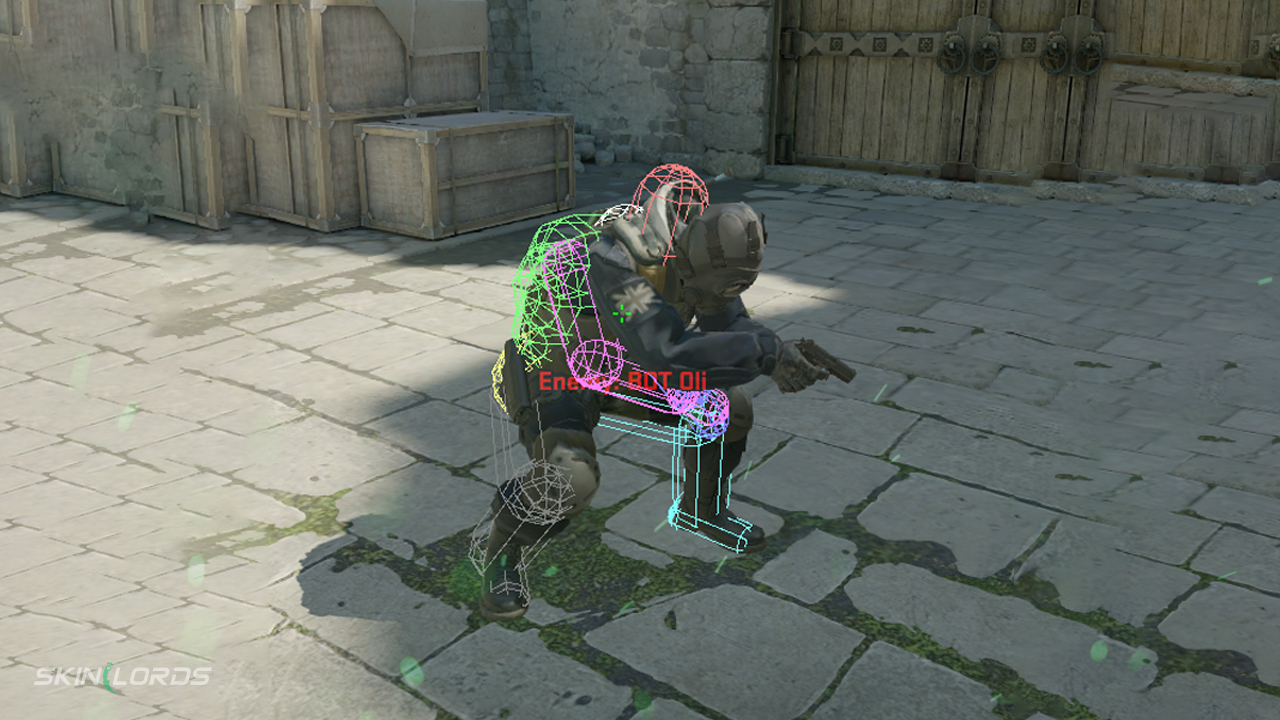
Though Valve has already rolled out many updates that have fixed common player model problems, many have been reported in the past. These problems are mainly due to changes in animations in CS2, such as when defusing the bomb or crouching. This includes situations where, when crouched, the displayed player heads are not part of the hitbox, leading to shots that appear as if they’ve hit but missed. Problems like these have led to many frustrating moments in Esports and casual play. This highlights the importance of accurate hitboxes in competitive games.
Wrapping Up!
In our CS2 Hitboxes guide, we’ve covered what hitboxes are, their anatomy, common myths, and finally, the problems with CS2 hitboxes. To learn more about CS2 through guides or community news updates, check out our other articles on the SkinLords Blog page! As always, keep learning and have fun out there!
Similar Articles
See all
Guides

What Are Original Games On Online Casinos?
07.19.2026
0
94
Guides

Are Live Casino Games Fair?
07.16.2026
0
94
Related Casinos

 Stake
Stake
Leave a reply